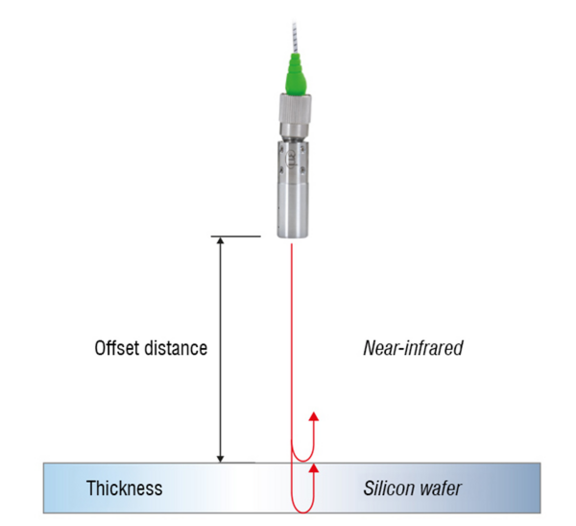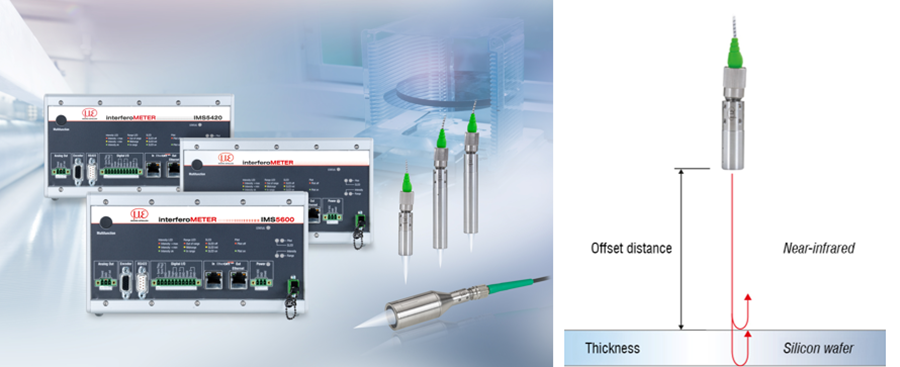
Based on highest resolution and a non-contact, non-destructive operating principle, interferometry measurement technology is used in numerous industries for quality assurance in high-tech areas. It reliably delivers high precision distance and thickness values, for example, in the production of semiconductors, optical components and precision mechanics, says Glenn Wedgbrow, Business Development Manager at Micro-Epsilon UK.
Interferometry measurement is used in numerous industry sectors where it helps to optimise processes, reduce waste and create innovative products, while fulfilling the highest performance requirements.
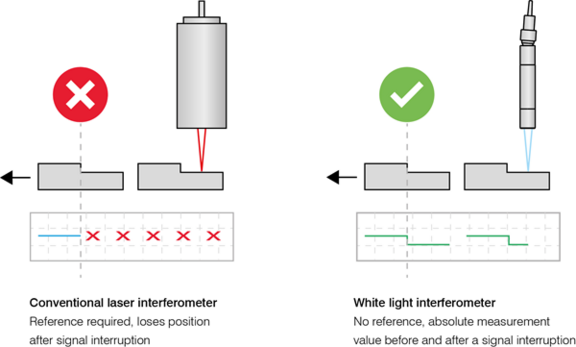
In interferometry, a distinction is made between laser and white light interferometers. Unlike laser interferometers, white light interferometers measure absolute distances without having to use a reference. They deliver extremely precise and clear measurement results in the sub-nanometre range. To do so, they use polychromatic (white) light with a short coherence length. The interference of light waves and the analysis of the received, superimposed waves can be used to precisely determine distances and intervals.
Automotive, semiconductors and metals
The non-contact measuring principle with remote electronics makes the systems insensitive to harsh environments such as high temperatures, shock or vibrations. Typical applications range from wafer and mask measurements in semiconductor production to the measurement of lenses, mirrors and glass surfaces. Sectors such as automotive, medical technology, metals and packaging industries also benefit from the outstanding properties of the technology.
So what are the advantages of absolute measuring white light interferometers over conventional laser interferometers, and what kind of applications are they used in?